
Interview with Mikkey Dee, Legendary Drummer of Motörhead and Scorpions!
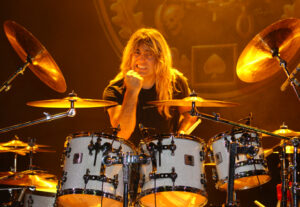 Legendary drummer Mikkey Dee of King Diamond, Motorhead, and now Scorpions is renowned as one of the most gifted and hard-hitting drummers in rock, who is holding the torch high for those of us who love uncompromising music. Today we’d like to bring to your attention this interview with Mr. Dee! Thanks to our special reporter Viktoriya Mancheva. Enjoy it!
Viktoriya Mancheva – reporter:
I don’t know about you, dear readers of Rock Arena, but my week was very special and I’m keen to share. My hope for humanity and the world was restored … Why? Because there are still humble and down-to-earth people who give you this sense of normality and natural behaviour, even in this reality And it’s refreshing and inspiring. I met with one of the most amazing drummers in the Rock and Heavy Metal world. He was a key player in one of the most iconic heavy metal bands for 25 years. Today he is a vital member of another just as powerful one, that has been shaping the metal music world for more than 50 years. The first one is Motorhead and the second is The Scorpions. Dear friends, it is with great pleasure that I share with you all my talk with Mr Mikkey Dee. The following interview is taken exclusively for Rock Arena UK.
♦
– Hello, Mikkey and welcome to Rock Arena! How are you feeling today?
♦Mikkey Dee: Hello Rock Arena! I am very well, thank you! Working, resting and gathering my energy for rocking again soon!
– Of all the glory times, bands and live gigs – which is the band that made you feel at home and sounded like the inner Mikkey Dee self?
♦Mikkey Dee: To be honest, all bands and musicians I’ve worked with have made me feel I’m in the right place and at home. I’ve been really fortunate that the opportunities have come my way at the right moment. I have known Lemmy for 35 years and worked with him for 25. Before I joined King Diamond, I had an offer from Motorhead but felt my new band, King, was the right one for me at that moment, so I had to say ‘no’. Years later, Lemmy offered me again and then I did feel like it was the right move for me and I accepted. You have to follow your gut for things like that and not overthink. I’ve worked with many super-talented musicians and they’ve all given me something special back and hopefully, I did too.

– You are from a drumming family, which bands have influenced the direction of your musical career?
♦Mikkey Dee: Yes! I have been very influenced by my relatives. My uncle and especially my cousin who is 6 years older than me. I started showing interest in drumming at a very young age and thankfully I had the right environment to develop my skills and pursue my career in music. I also have been very influenced by other amazing drummers – Ian Paice, and Brian Downey. I’m a huge fan of Rush, Neil Peart was someone who I really got inspired by and has affected my style and music.
– Which was the first album you bought, your first concert and band ever?
♦Mikkey Dee: Oh, wow! The first album I bought was of a Swedish pop band called The Hep Stars. Amazing band. Their song “Cadillac” was #1 in Sweden. My first concert… I was 6. I went with my cousin to see Deep Purple and my faith was sealed. What I really like about those years was that we were able to go and get exposed to this music at a young age. The times were different back then. There was no alcohol in those venues, so everyone could go and enjoy the music.
– We can’t see a lot of great bands like Motorhead… Lemmy Kilmister personified rock music completely! Going back to the beginning, what were the greatest challenges and your most memorable moments of the first time you played with Motorhead?
♦Mikkey Dee: Ah, you know, Lemmy was such an extraordinary guy. He had this gift of having a gut feeling that was 100 out of 100 times right, you know. 100% right! Never failing. You could tell Lemmy whatever you wanted about someone- how good they were, how talented they were etc. He would give that person one look and would say, ‘No, he’s no good’. And that would be it, and days later, months, years of life will prove him right. That was unbelievable.
When I joined Motorhead, I was a California rocker, you know. I looked like a drummer from Poison – the hairstyle, the looks. When Motorhead announced that I was going to be their new drummer, many people voiced an opinion and said I wasn’t the right fit for the band. They didn’t think of my drumming style nor wanted to give me the benefit of the doubt. The looks were far more important for them and they judged the book by its cover. Lemmy stood up for me. He defended the band’s decision and never backed down.
He used to say, ‘You haven’t heard this guy’s play. Just wait and hear him play and you’ll see’. That’s what happened. His gift of being right showed again. He gave me the chance and backed me up. He never tolerated Ass kissing attitude. Sometimes he would say to me ‘Mikkey, you’re such a pain in the ass’. He wanted me to take charge with running the band and I did for 25 years. Motorhead was in a very messy state at the time I joined. I was the guy in the middle. Between the band and management, between the management and the band, and between all parties involved. And, eventually, things started running smoothly and we could focus on making amazing music. It was one of the best experiences of my life.
– Scorpions is one of the most successful rock bands in music history and you joined the Scorpions permanently in 2016, how did everything start?
♦Mikkey Dee: It was in January 2016. I was in California for Lemmy’s funeral when I got a phone call from Thin Lizzy… We’ve known each other for years and are great friends. I’ve always been a big fan of Brian Downey too. So they called and offered me to do 8 shows with them in the summer. I immediately said, ‘Yes’. I thought: ‘That’s exactly what I need right now’. I need to refocus on music and life again. So I came back to Sweden. I remember it was a Thursday and I got a call from Matthias and he said, ‘Can you come to Luxembourg tomorrow?’ We had a short conversation and I remember learning songs all night… And next thing I was on my way to Luxembourg on Friday. The band was doing shows for the following three weeks. They felt quite uneasy about James being unstable and wanted to have a plan B. It was crazy. I was playing 16 hours every day to make sure I was ready to step in if they needed me. So, it happened it was all fine with James and I didn’t have to step in, but we clicked and felt the energy together.

– You were quite young when you joined King Diamond, how was it for you to be thrown into that scene at such a young age?
♦Mikkey Dee: For me, it was all-natural. I had done a lot of touring by then with Nadir and Geisha. The whole routine of concerts, shows, and performances was already part of my life. So when we spoke with King (Diamond) about working together I just knew they were the right band for me. I felt it was the right moment to join in and it was a great decision for my career.
– You also play on the Don Dokken’ album “Up from the Ashes” (1990), and on the Helloween’ “Rabbit Don’t Come Easy” (2003) album. Tell us more about that experience…
♦Mikkey Dee: I left King Diamond in 1988. It was a great time in my career and only then I realised how huge we were. With Don Dokken we did ‘Up from the Ashes’ (released in 1990), also with Helloween on one album ‘Rabbit Don’t Come Easy’ (released in 2003). We worked really hard. I remember playing often 14-16 hours per day. Indeed great time and worth it. And Grunge comes on the scene and kills all the ‘hairy bands’ (smiles), and it was a different and new experience. Of course, this is life, and in life, there’s always something new that amazes and fascinates. It’s all part of the game.
– You’ve been drumming in heavy rock ‘n’ roll bands for more than thirty-nine years now. What was your favourite drum solo you’ve ever written or played?
♦Mikkey Dee: You know, I have to admit I’m not a fan of the drum solos. Don’t get me wrong I have done them and it’s been fun. But for me, it’s always about the whole package. We are on stage to entertain people not just demonstrate technical skills. I have done two full tours with Motorhead with not one solo in them. Some people were shocked (laughs). For me, it’s never been a necessity. Drums go hand in hand with the vocals, guitars, keyboards etc. Having said that doesn’t mean I am completely opposed to drumming solo. For one solo to be really it must be powerful and diverse.
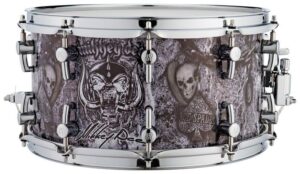 – Regarding drums, you have been loyal for many years to the brand Sonor. About the drumsticks – you used to be with Vic Firth for ages, but you moved to the Wincent brand, which made you a signature model. What was the main motivation?
♦Mikkey Dee: Indeed I have been using Sonor my whole life. They are amazing. I have been also using DW drum sets and pedals in particular. With Vic Firth (Vic Firth Home page) we introduced a weight control system. We would arrange the different sticks in separate piles – light, medium, and heavy. I personally like the 62 to 64-gram sticks. About Wince (Wincent) brand, yes, I moved to them and have a signature model. I also became part-owner of the company. They are a Swedish brand and their quality is superior to many others. To make really good quality drumsticks requires a lot of expertise. It all depends on the wood, and where it comes from, the quality of the production is really important too along with quality control. Each stick has a different wood density. It is also important how the weight is distributed more. There’s a whole science behind it (happy smile).
– What do you think about the state of rock music and the music business? What’s the difference between the time of the 80s-90s and now?
♦Mikkey Dee: Technology is so advanced now. It’s amazing how amazing musical products you can make. When we were young we had to be really good and play for many hours to make sure things go well in life. Most of us were playing a lot of live gigs. Nowadays with everything online, you can easily ship something out and it can be super impressive. You have to be mindful though that live gigs are a whole different experience and every artist has to prepare for it. I have been very lucky. My son Marcus, has continued the family tradition and plays many instruments. I have been able to see how he has progressed and upgraded during the years. He too as so many young artists uses technology in his music, but uses it as a tool to create certain effects as part of the process. I guess what I’m saying is that you have to use technology as part of a set of tools to create music and experience. You shouldn’t use it as the only means to create the experience.
– Thank you for taking the time out to do this interview, Mikkey! Your message to all the Rock & Meta/heads around the globe?
♦Mikkey Dee: Thank you for the chat, Rock Arena! We love the UK and our fans there! Great experience with great people! See you soon.
More information at:
www.the-scorpions.com
www.facebook.com/Scorpions
Editor: Toni Rock
Reporter: Viktoriya Mancheva